Misc.
|
Jan 17, 2020
Tire tread depth does more than help your vehicle grip the road. It plays a direct role in how quickly your tires can create traction when you hit the brakes. When the tread gets shallow, stopping distances grow, especially on wet pavement where water must move somewhere fast.
Drivers across Mississippi deal with sudden downpours, humid roads, and slick surfaces that show up without warning. If your tread depth falls too low, your tires can’t clear water or maintain grip the way they should. Keep reading to understand how tire tread depth impacts your braking distance and the warning signs that mean it’s time to replace your tires.
Braking distance describes how far your vehicle travels from the moment you apply the brakes to the moment the vehicle stops. Your brakes create the force, but your tires deliver that force to the pavement. If your tires can’t hold the road, the braking system cannot do its job as effectively.
Traction comes from rubber meeting the road with enough pressure and enough surface contact to resist sliding. Tread helps manage how that rubber contacts the pavement. As tread wears down, your tires lose their ability to stabilize that contact under braking, especially when the road surface changes.
On dry roads, tread depth still matters, but the tire can typically maintain usable grip even as it wears. Rubber can bite into the micro-texture of the pavement, and the road surface is not fighting you with a film of water. Even so, worn tread can reduce stability during hard stops and can increase the odds of a skid if you brake aggressively.
On wet roads, tread depth becomes the main factor that determines whether the tire can push water away fast enough. When water stays between the tire and the road, the tire rides on that water. At that point, braking force does not transfer effectively, and the stopping distance increases quickly.
Tire wear does not feel dramatic day to day. That slow change is why many drivers do not notice a problem until their first panic stop in the rain. As tread depth drops, your tire’s performance declines in stages, and braking distance tends to increase more sharply once you pass certain wear points.
Wet braking typically shows the earliest and most noticeable decline as tread wears. The tire depends on groove depth to move water away. When the grooves get shallower, the tire cannot clear water fast enough to keep rubber on the pavement.
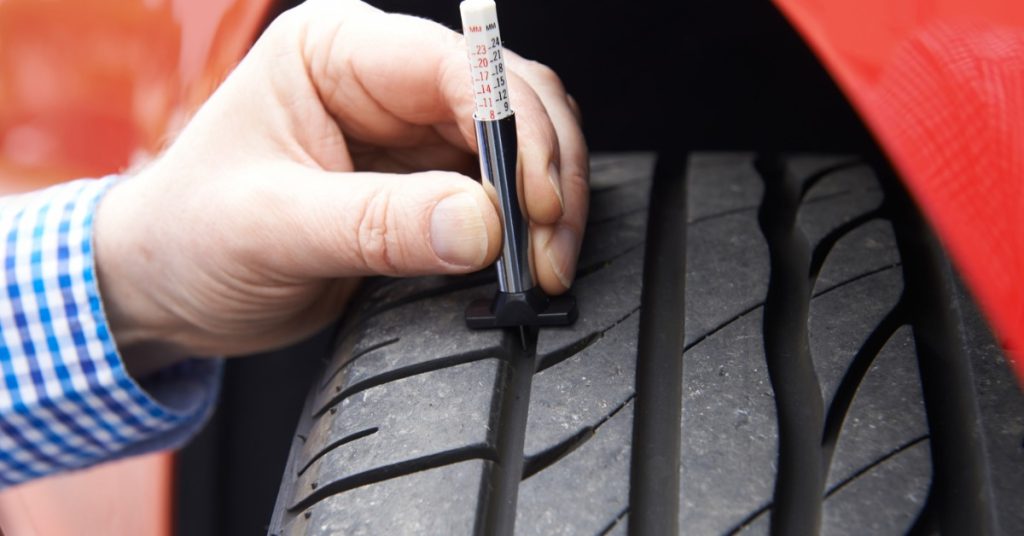
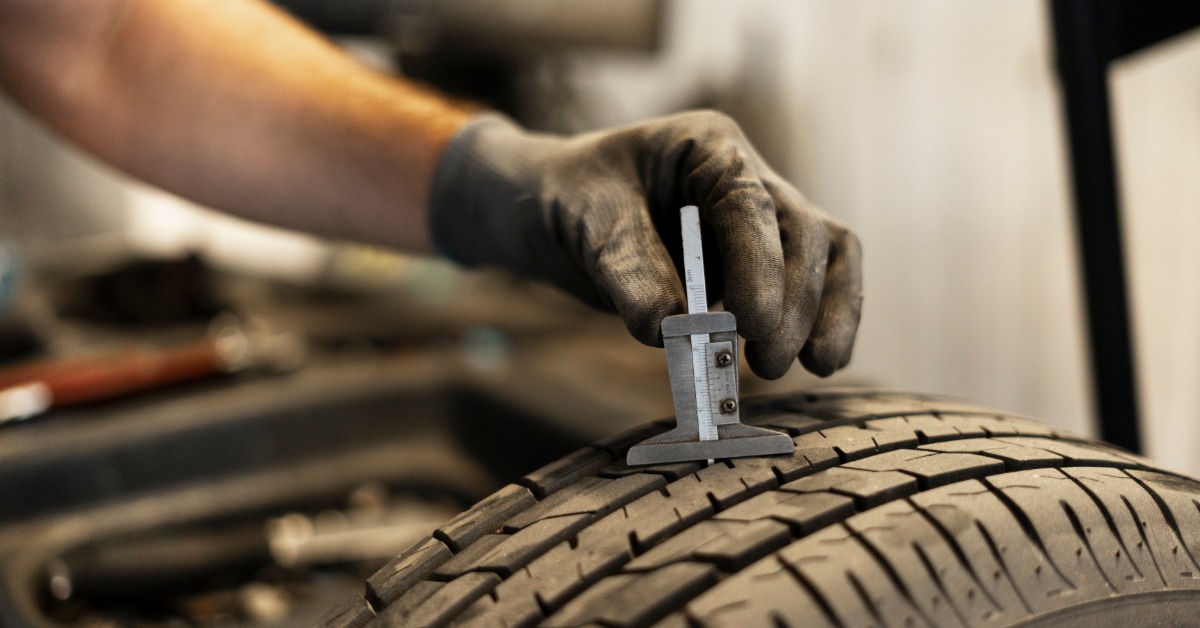
Now that we understand how tire tread depth impacts your braking distance, we can explore how to measure it. We measure tread depth in 32nds of an inch. New passenger tires typically start around 10/32″ to 12/32″, though the exact number varies by tire type. As you drive, that tread wears down gradually.
Many drivers hear about 2/32″ because it is the legal minimum tread depth in many places. Legal minimum and safe performance are not the same thing. For wet traction and shorter braking distance, you usually want more tread than the bare minimum.
You don’t need to wait for a tread measurement to notice when braking performance is fading. Your vehicle will give you signals, especially on wet roads. Paying attention to these changes can help you replace tires before you experience a dangerous slide.
Tread depth is not only about tread wear. It is also about how evenly the tread contacts the road. If your tires wear unevenly, part of the tire can lose grip earlier under braking, which increases stopping distance and reduces control.
Uneven wear usually comes from alignment issues, worn suspension parts, improper inflation, or a lack of rotation. If one shoulder wears faster than the rest, the tire loses water-clearing ability in that area. During braking, the vehicle may pull slightly, or it may feel unstable as the tire tries to grip inconsistently.
Tread depth matters at any speed, but higher speeds make shallow tread more dangerous. When your speed increases, your vehicle covers more ground every second. If your tires need even a little more time to grip and slow down, you travel farther before stopping.
Road conditions also change the equation. Smooth pavement, worn asphalt, or roads with pooled water all reduce grip. Add a shallow tread, and your braking distance can increase quickly. This combination is common during Mississippi storms when water collects near intersections and low spots.
You can check tread depth without special tools, though a tread depth gauge makes the job easier. The key is to check multiple points across the tire because uneven wear can hide in areas you don’t notice immediately.
Start by looking at the built-in wear bars. These bars sit in the grooves of the tire and become flush with the tread when the tire is near the end of its usable life. If the tread is close to those bars, you’ve already compromised your vehicle’s braking performance.
Front tires wear differently from rear tires, especially on front-wheel-drive vehicles. If your front tires wear faster, your wet braking performance can drop because the front tires handle much of the braking load. If your rear tires wear unevenly, the vehicle can lose stability during braking and become more prone to sliding.
If you wait until the tread is nearly gone, you accept longer braking distances in the exact conditions where you need traction most. A more safety-focused replacement point helps you maintain wet braking performance and reduce the risk of hydroplaning.
Many drivers replace tires before reaching the legal minimum because they want more predictable stopping in the rain. If you notice frequent slipping, longer stops, or reduced confidence on wet roads, replace the tires sooner.
Tread depth does not decline at the same rate for every driver. Maintenance makes a major difference. Proper inflation helps the tire contact the road evenly, which improves braking and slows uneven wear.
Routine rotations help spread wear across all four tires. Alignment services help prevent one edge from wearing down faster than the rest. These steps preserve tread depth longer, which helps keep braking distance shorter over the life of the tire.
Tread depth affects braking distance every time you drive, and the difference becomes most obvious when roads turn wet. If your tires can’t move water and maintain grip, your vehicle needs more room to stop. That extra space can be the difference between stopping safely and sliding into the car ahead.
If your car’s tires have worn down and you need new tires in Hattiesburg, MS, RNR Tire Express is here to help! Shop our wide inventory of tires or talk to a professional for guidance on what’s best for you and your car today.
By signing up you agree to our Privacy Policy.