Safety Tips
|
Jul 28, 2023
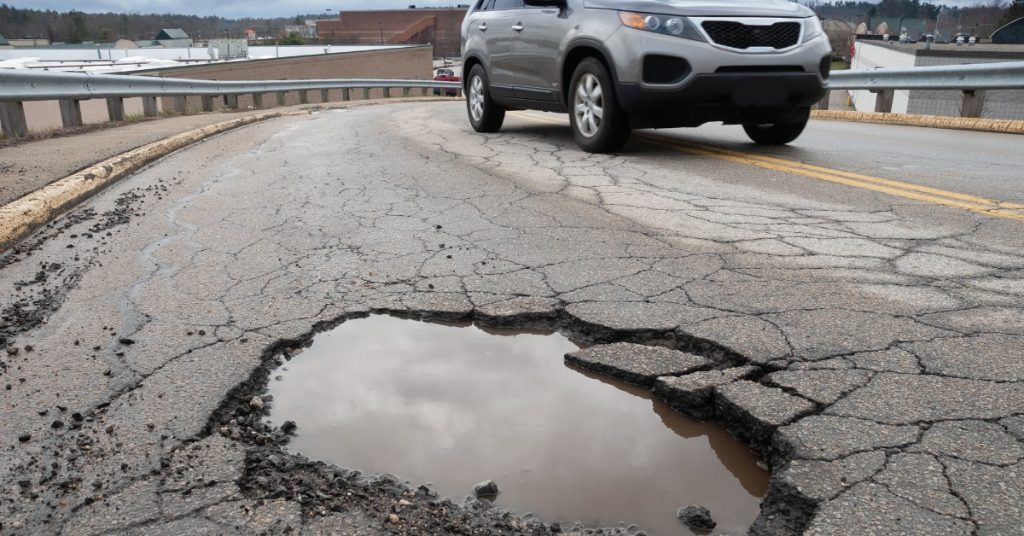
Drivers in every part of the U.S. have had to deal with potholes at one point or another. What was once a smooth drive can suddenly turn into a jolt that leaves you and your vehicle rattled.
Potholes can turn an ordinary drive into an expensive problem in seconds. A deep hole or sharp road edge can strike a tire with enough force to damage its internal structure or disturb the vehicle’s alignment.
Drivers often assume everything is fine when the tire stays inflated, and the vehicle continues moving normally. Unfortunately, potholes can damage tires and wheels without showing an obvious warning right away. Knowing which symptoms deserve attention can help drivers protect their vehicle.
A tire normally flexes as it rolls over minor road imperfections. That flexibility helps absorb small bumps and keeps the vehicle relatively comfortable. A pothole creates a much more sudden impact, especially when a tire drops into the hole and strikes its far edge.
Speed can make the impact considerably harsher because the tire has less time to conform to the road surface. Low tire pressure may also increase vulnerability because the sidewall can compress farther during the strike. The tire may become pinched between the pavement and wheel, creating forces that its internal structure cannot safely absorb.
Tire sidewalls contain internal cords that provide strength while allowing the tire to flex. A hard pothole strike can damage those cords without cutting through the exterior rubber. Drivers may not notice anything unusual right after the impact.
A bulge or bubble can eventually appear where the internal structure has weakened. This condition deserves immediate attention because the damaged section no longer provides the strength that the tire manufacturer intended. Continuing to drive on a tire with a sidewall bulge increases the risk of sudden tire failure.
Potholes can also leave cuts, abrasions, or small cracks along the sidewall. Drivers should inspect the impacted tire or bring it to a professional if the impact felt particularly severe.
Some pothole impacts create an obvious flat tire within seconds. The strike may puncture the tire or interfere with the seal between the tire bead and wheel. In those situations, drivers usually recognize the problem quickly.
Other impacts cause much slower pressure loss. A slightly bent wheel or damaged bead area may allow small amounts of air to escape over several hours or days. Drivers might repeatedly add air without realizing that the original pothole impact caused the recurring pressure problem.
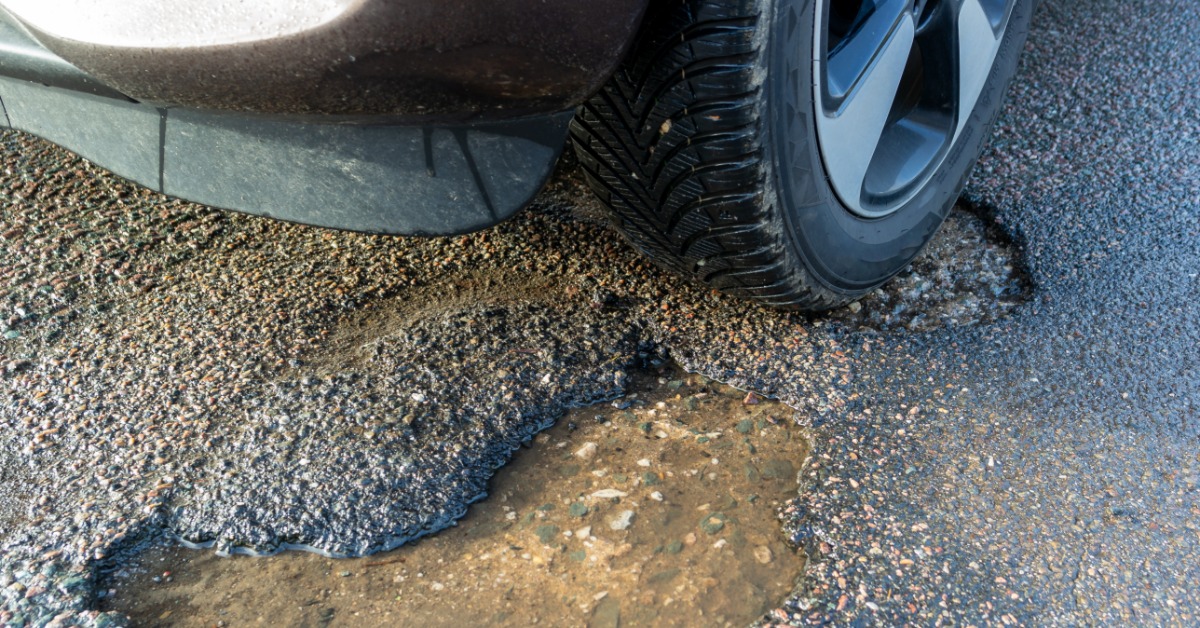
The tire absorbs much of a pothole impact, but it cannot always protect the wheel underneath it. A particularly sharp strike can bend the inner or outer wheel lip. Alloy wheels may also crack when the impact concentrates enough force in one area.
Even a small change in wheel shape can affect how smoothly the tire rotates. Severe damage may require wheel repair or replacement before the vehicle can operate safely and comfortably again.
Watch for several symptoms after hitting a pothole:
These symptoms do not always confirm pothole damage by themselves. However, they provide a strong reason to have the affected tire, wheel, and surrounding components inspected.
A pothole can send a significant shock through the wheel and into the suspension. A strong enough impact may change wheel alignment angles or contribute to problems with steering and suspension components. Drivers often notice these changes in how the vehicle behaves on the road.
The steering wheel may no longer sit straight while traveling forward. The vehicle might drift or pull to one side on a reasonably level road. Drivers may also notice that steering feels different than it did before the pothole impact.
Misalignment can eventually shorten tire life because the tread no longer meets the pavement as evenly as intended. Certain sections may wear much faster than others. Addressing the alignment problem early can help protect otherwise usable tires from unnecessary wear.
Correct inflation cannot make a tire pothole-proof, but it helps the tire handle road impacts as designed. Underinflated tires flex more than properly inflated ones. During a pothole strike, that extra movement can allow the sidewall to compress sharply against the wheel.
Overinflation creates a different concern because excessive pressure can reduce the tire’s ability to absorb abrupt road impacts comfortably. Drivers should follow the vehicle manufacturer’s recommended cold tire pressure rather than relying on the maximum pressure printed on the tire sidewall.
Check pressure regularly and before longer drives. Drivers shopping for tires in Corpus Christi should also consider local driving conditions and vehicle requirements. At RNR Tire Express, our team can help drivers find the right tires to support better everyday performance on rough roads.
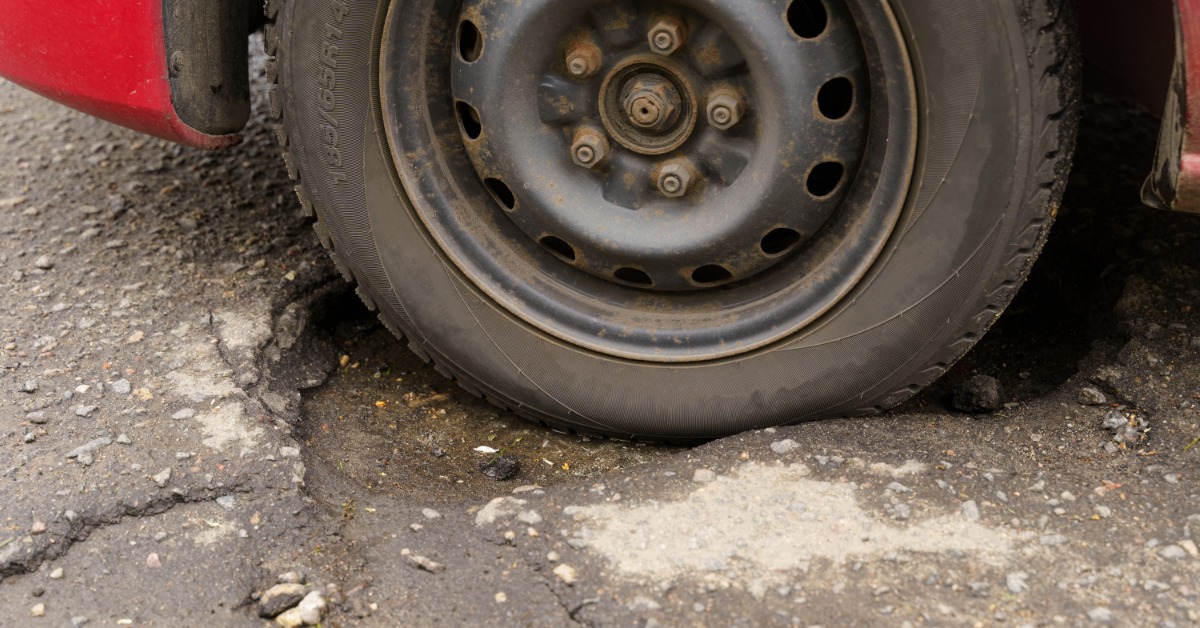
Vehicle speed plays an important role in the severity of many pothole impacts. A faster-moving wheel hits the pavement edge with greater energy and has less opportunity to move smoothly through the depression. Slowing down before rough pavement can reduce the force transferred into the tire and wheel.
Tire construction also affects how a vehicle responds to poor road surfaces. Low-profile tires have shorter sidewalls, which means they provide less cushioning between the road and wheel. They can deliver responsive handling, but a severe pothole may place the wheel closer to the point of impact.
Drivers should never make sudden, unsafe steering movements to avoid a pothole. When traffic conditions allow, reducing speed smoothly and maintaining control usually provides a safer response.
After a major pothole impact, pay attention to how the vehicle feels. New vibration, pulling, steering changes, or unusual noises can indicate that something changed during the strike. Find a safe place to stop if the vehicle suddenly feels difficult to control.
Inspect the tire for visible cuts or bubbles. Look at the wheel for obvious dents or cracks, but remember that some damage can occur on the inner side where drivers cannot easily spot it. Avoid continuing at highway speeds when the tire or wheel shows clear signs of serious damage.
Potholes remain an unavoidable part of driving, but they don’t have to damage your tires and wheels. Safe driving and quick reactions to pothole impacts can reduce the damage.
Always check the tire after a pothole impact, even if you don’t see any damage from a distance. A tire that looks normal from several feet away can still have internal damage after a severe strike. Wheels and alignment can also suffer even when the tire remains inflated.
RNR Tire Express can help drivers evaluate tire condition after a hard pothole impact and determine when replacement makes sense. Our professional technicians can identify problems before they lead to uneven wear or unexpected tire trouble. Visit RNR Tire Express for tire service and replacement options that help keep your vehicle ready for the road ahead.