Tires
|
May 30, 2019

A tire puncture can turn a normal drive into a frustrating stop on the side of the road. One minute, your vehicle feels fine, and the next, the steering feels heavy, the tire pressure light comes on, or you hear the unmistakable slap of rubber against pavement.
Unfortunately, roads are full of small things that can cause big problems in your tires. Below, we list some types of objects to watch out for that can puncture your tires.
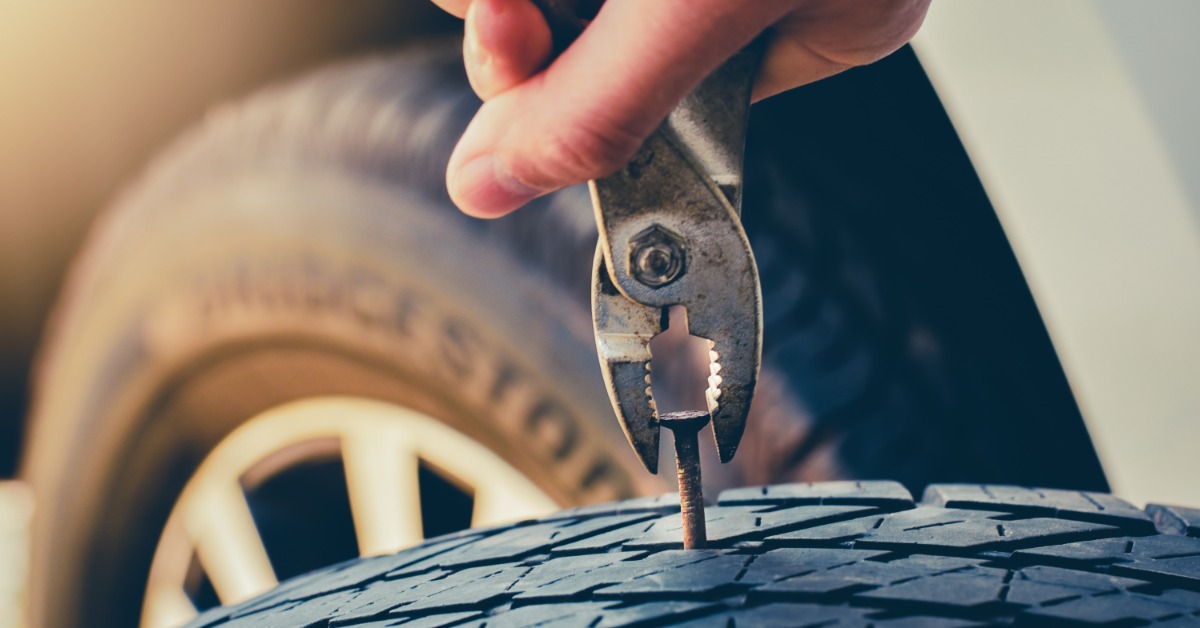
Nails rank among the most common causes of tire punctures because they show up in so many places. Construction zones, home renovation sites, hardware store parking lots, and road shoulders can all leave nails where vehicles pass. A nail can enter the tread cleanly and embed deeply, which may slow the air loss enough that you do not notice the problem right away.
When a nail punctures the tread area, the tire may still hold air for a short time. Air pressure may drop gradually, which increases heat, weakens the tire, and affects handling. If you spot a nail in your tire, avoid pulling it out yourself, since removing it can make the tire lose air faster.
Screws create many of the same problems as nails, but their threaded shape can make them even more stubborn. As a tire rolls over a screw, the object can twist deeper into the rubber. This can create a tight seal at first, which makes the leak seem minor until pressure drops enough to trigger a warning light or change how the vehicle drives.
Screws can come from construction materials, furniture parts, loose cargo, or debris in parking areas. They can lodge in the tread and may make a clicking sound as the tire rotates.
Glass is another type of object that can puncture your tires to watch out for. Broken glass can slice into rubber, especially when shards have sharp edges, and the tire presses down with the full weight of the vehicle. While many modern tires can roll over small glass fragments without immediate damage, larger pieces can cut into the tread or sidewall.
A glass-related puncture may create a cut instead of a small round hole. That matters because cuts can spread as the tire flexes during driving. Sidewall cuts need special attention because the sidewall carries major stress and requires a different type of repair than a typical tread puncture.
Metal shards can come from worn vehicle parts, damaged road signs, construction materials, cargo spills, and scrap debris. These pieces may not look as obvious as nails or screws, but they can be sharp enough to pierce a tire quickly. Thin strips of metal can also slice the tire rather than puncture it in one small spot.
Drivers may encounter metal debris near industrial areas, work zones, and busy highways. If you see shiny fragments on the road, steer around them when you can do so safely.
Staples, tacks, and small fasteners may look harmless, but they can still puncture a tire under the right conditions. Heavy-duty staples from packaging, roofing, or construction work can have sharp points that dig into the tread. Thumbtacks and similar items may also cause leaks if they stand upright as the tire rolls over them.
These small objects can be hard to see, which makes them frustrating for drivers. A tiny puncture can create a slow leak that causes low-pressure readings. If you keep adding air to the same tire, a small fastener may be in the tread even if the tire looks normal at first glance.
Sharp rocks can damage tires on rough roads, gravel driveways, construction entrances, and unpaved shoulders. Not every rock creates a puncture, but jagged pieces can cut into the tread or wedge into tire grooves. The risk increases for a tire with low tread depth because less rubber separates the road from the inner tire structure.
Sharp rocks can also contribute to chipping, cuts, and uneven tread wear. If you drive through gravel or rough areas, inspect your tires afterward when convenient.
After a crash, the road may hold plastic fragments, metal clips, broken lights, sharp trim pieces, and other debris. These objects can scatter across lanes before cleanup crews arrive. Even small pieces can have sharp edges that puncture or cut a tire.
Drivers naturally focus on moving traffic after passing a crash scene, but the leftover debris can create hazards too. Slow down when conditions allow, keep extra space from nearby vehicles, and avoid driving through visible fragments.
Construction areas can leave behind nails, screws, wire, metal straps, broken concrete, and sharp wood fragments. This debris can collect near entrances, lane shifts, shoulders, and temporary road surfaces. Drivers in Mississippi may pass through roadwork zones, building projects, and commercial areas where tires face extra exposure to sharp materials.
Construction debris can cause immediate punctures or slow leaks. It can also damage more than one tire if a vehicle drives through a cluster of sharp objects.
Loose wire can puncture a tire, especially when it comes from damaged cargo, roadside debris, or worn tire pieces from other vehicles. Steel belt fragments from tire blowouts can also create hazards on highways. These thin, sharp strands can pierce tread or wrap around wheel components.
Wire damage can be tricky because the object may break off after puncturing the rubber. That can leave the leak behind without an obvious item stuck in the tire.
Wood may not seem as threatening as metal or glass, but splintered boards can puncture tires when they contain sharp points or hidden fasteners. Roadside lumber, pallet pieces, storm debris, and broken branches can all create problems. A sharp splinter can dig into the tread, while a board with a nail can cause deeper damage.
Wood debris becomes more concerning after storms, moving-day spills, or construction activity. Avoid driving over boards when possible because you may not know what sits on the underside.
If your tire pressure light comes on, your vehicle pulls to one side, or you hear a clicking sound from a tire, find a safe place to stop and inspect the tires visually. Look for obvious objects, low tire height, sidewall damage, or cuts in the tread.
If the tire still has air, drive carefully to a tire professional for an inspection. Avoid removing any object stuck in the tread, since it may be containing the leak.
Tire punctures can come from small objects, but they can create major stress when they interrupt your day. Paying attention to road debris, tire pressure, and changes in how your vehicle feels can help you catch problems before they get worse. If you think you have a puncture in your tire, take it to a trusted tire shop in Vicksburg, MS, like RNR Tire Express. Our tire experts will inspect every inch of your tire and explain your options for repair or replacement.
By signing up you agree to our Privacy Policy.