Tires
|
May 30, 2019
A tire may look like a simple ring of black rubber, but its construction involves chemistry, engineering, precision machinery, and repeated quality checks. Every layer serves a purpose, from helping the tire grip the road to supporting the vehicle’s weight. Manufacturers combine several materials and shape them through a carefully controlled process before a finished tire reaches a vehicle. Below, our comprehensive guide will take you through every step of how tires are made, from initial design to final quality checks.
Before factory work begins, engineers determine what the tire must do. A passenger tire for quiet highway travel requires different features than a tire built for heavy loads, wet roads, high-speed handling, or off-road traction. Engineers set targets for tread life, rolling resistance, road noise, comfort, braking, durability, and grip.
They then create tread patterns, choose materials, and test virtual or physical prototypes. Small changes in tread-block shape, groove depth, sidewall stiffness, or rubber formulation can alter how a tire performs. Manufacturers may repeat this development process many times before approving a design for full production.
Rubber constitutes the most visible part of a tire, but manufacturers use several types rather than relying on one universal formula. Natural rubber supports strength and flexibility, while synthetic rubber can help engineers fine-tune traction, wear, and temperature performance. Different areas of one tire may use different compounds because the tread, sidewall, and inner liner face separate demands.
Manufacturers also mix rubber with carbon black, silica, sulfur, oils, resins, and other additives. Carbon black reinforces rubber and contributes to a tire’s familiar dark appearance. Silica can support wet traction and rolling-resistance performance, while sulfur plays a central role during curing.
A tire also contains structural materials that most drivers never see. Steel cords form belts beneath the tread and help stabilize the tire’s contact patch. Textile cords that feature polyester, nylon, or rayon may reinforce the body of the tire while allowing flexibility.
The bead uses high-strength steel wire to hold the tire securely against the wheel rim. An inner liner made from low-permeability rubber helps retain air in a tubeless tire. Together, these hidden components allow the tire to maintain its shape, carry weight, and respond predictably during steering and braking.
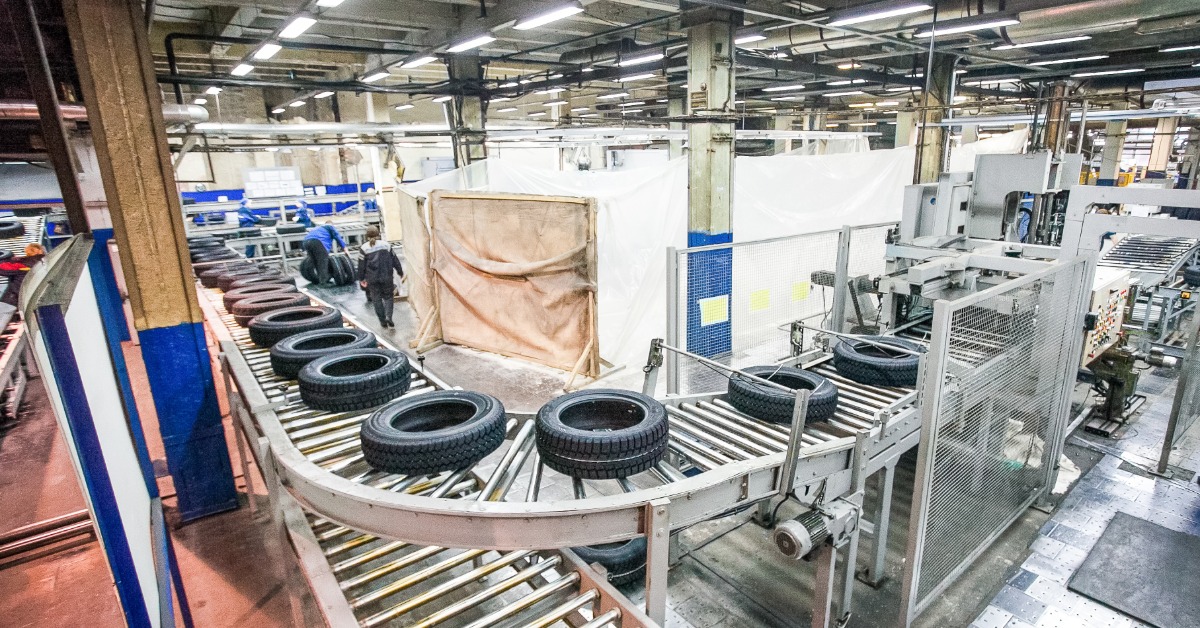
Production begins by carefully measuring ingredients. Large industrial mixers combine rubber, reinforcing fillers, oils, and chemical additives under precise heat and pressure. The exact formula varies depending on where the compound will appear in the tire and what performance characteristics engineers want.
After mixing, the rubber leaves the machine in thick sheets or slabs. Factory teams cool, label, and store each batch for the next stage. Consistency matters because a variation in temperature, timing, or ingredient quantity can affect the tire’s strength and performance.
The factory next turns materials into specific tire parts. Extrusion machines push rubber through openings to create continuous strips for the tread and sidewalls. Calendering equipment presses rubber onto steel or textile cords, producing reinforced sheets with precise thickness and alignment.
Workers or automated systems cut these sheets at specific angles and dimensions. Other equipment forms bead bundles by winding rubber-coated steel wire into strong rings. Each component must meet exact measurements so that the parts fit together correctly during assembly.
The tread compound must provide a balance of grip, wear resistance, and heat control. An extruder shapes it into a wide strip, but the familiar tread pattern does not appear yet. At this point, the material has a smooth surface.
Sidewall strips go through a similar shaping process, although their compound and dimensions differ. Sidewalls must flex as the tire rolls while protecting internal cords from weather, impact, and abrasion. Manufacturers may also prepare separate rubber strips for the inner liner, bead area, and other transition zones.
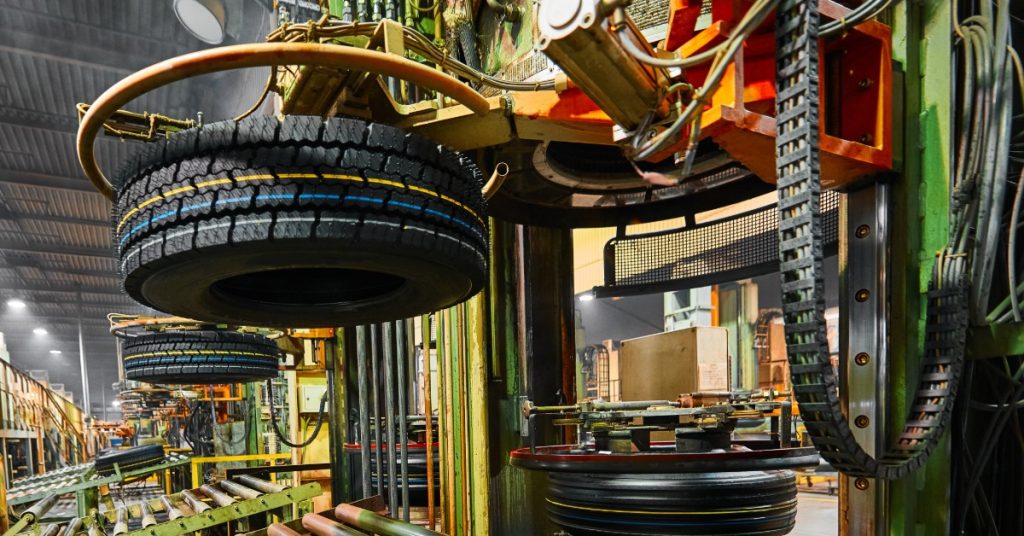
A tire-building machine assembles the components in a specific order. The process generally starts with the inner liner, with the next being the body plies, bead assemblies, sidewall material, steel belts, and tread rubber. Rollers press the layers together and remove any air between them.
At this stage, the unfinished product is called a green tire. The term does not describe its color or environmental impact. It simply means the tire has been assembled but has not yet gone through the curing process that gives it its final shape and strength.
The green tire enters a curing press containing a hot mold. A flexible bladder expands inside the tire, pressing it outward against the mold under heat and pressure. This step creates the tread pattern, sidewall lettering, size information, and other markings.
Heat also triggers vulcanization, a chemical process that changes the rubber from a soft, workable material into a strong, elastic structure. The rubber compounds bond with the reinforcing materials, and the separate layers become one integrated tire. Manufacturers control curing time, pressure, and temperature closely because these settings affect durability and performance.
After curing, the tire cools and moves into inspection. Trained employees and automated systems check its surface for visible defects, incorrect markings, or shape problems. Manufacturers may also use X-ray equipment to examine internal components they can’t see from the outside.
Additional machines can evaluate balance, uniformity, dimensions, and how evenly the tire rolls under load. Some tires undergo destructive testing, endurance testing, high-speed testing, or laboratory analysis as part of production monitoring. A tire must satisfy the manufacturer’s standards before it can move to distribution.
A tire rotates hundreds of times during every mile of travel while carrying substantial weight and responding to heat, bumps, water, and steering forces. Small construction errors could create vibration, uneven wear, poor handling, or structural weakness. Precision at every stage helps the tire perform as it should.
Manufacturing quality does not eliminate the need for proper care after installation. Drivers still must maintain inflation pressure, schedule rotations, monitor tread depth, and address alignment issues. Correct tire selection and professional installation also help the product deliver the intended results.
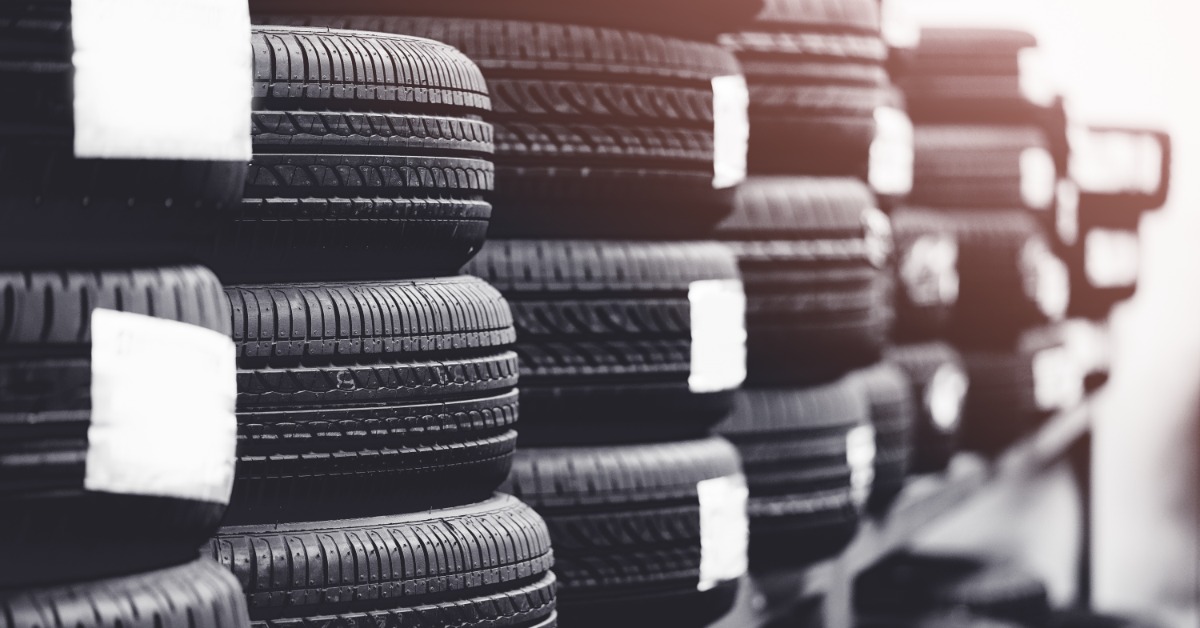
After approval, manufacturers label, sort, store, and ship the tires to warehouses, distributors, and retailers. The sidewall markings help identify the tire’s size, load capacity, speed rating, construction, and production information. Retail professionals use these details, along with vehicle requirements and driving needs, to recommend suitable options. Proper storage conditions also protect tires from unnecessary exposure to heat, moisture, sunlight, and contaminants before installation and sale.
Now that you’ve read our comprehensive guide to how tires are made, you have a firm grasp of the process and can shop for new tires with confidence. Each stage depends on careful design, controlled production, and detailed inspection.
When it is time to replace your tires, visit the RNR Tire Express tire shop in Gulfport, MS. Our team can help you compare options suitable to your vehicle, driving habits, and budget. Visit us today to find quality tires, flexible payment options, and professional service for the road ahead.
By signing up you agree to our Privacy Policy.