Tires
|
May 30, 2019
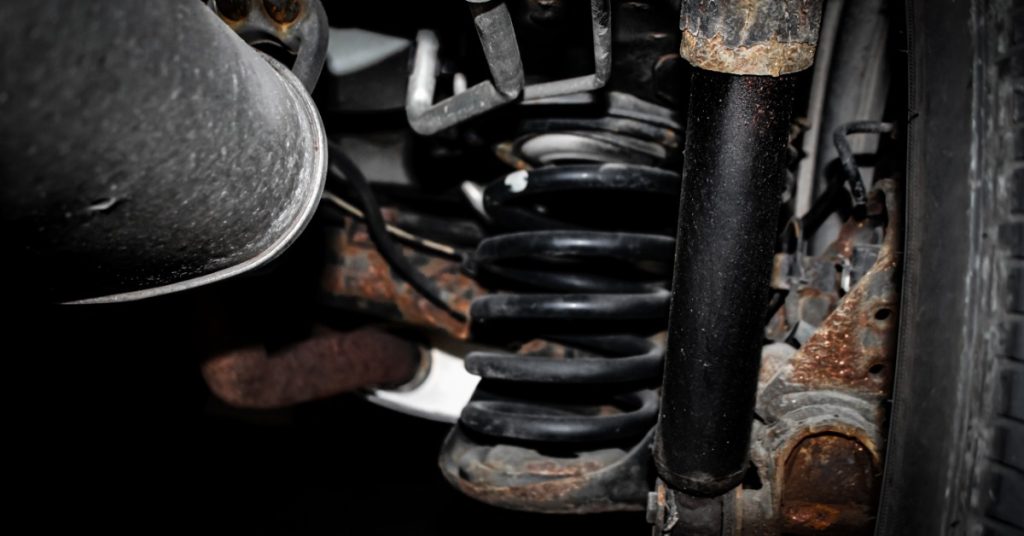
Your tires can reveal quite a bit about what happens elsewhere in your vehicle. When suspension components wear or lose their ability to control wheel movement, the tires may start to show unusual patterns long before the ride feels different.
Those patterns deserve attention. Worn suspension parts can shorten tire life, affect handling, and contribute to alignment problems that become more noticeable over time. Keep an eye out for the following signs that your suspension is damaging your tires.
Your suspension positions each tire against the road as your vehicle accelerates, turns, and travels across uneven pavement. Springs support the vehicle, and shocks or struts control excess movement. Control arms, bushings, ball joints, and other components help maintain proper wheel position.
When those parts work correctly, each tire maintains relatively consistent contact with the pavement. Wear then develops more evenly, assuming tire pressure, alignment, and rotation habits remain within proper ranges.
A worn component can change that relationship. A wheel may move farther than you intend, tilt away from its correct angle, or bounce after the vehicle crosses a bump. Each problem can place extra stress on a particular section of the tire.
Cupping ranks among the more recognizable signs that your suspension is damaging your tires. Instead of a smooth tread surface, you may notice multiple dips or scooped-out sections around the tire.
Weak shocks or struts can contribute to this pattern because they no longer control the wheel as effectively. The tire may frequently lose firm contact with the pavement and then strike the road again. Over many miles, that repeated motion can remove rubber in irregular patches.
Drivers should check for unusual tread patterns before replacing a damaged set. New tires can develop similar wear if an unresolved suspension or alignment issue remains underneath the vehicle.
A healthy tire should generally wear across its tread in a reasonably balanced way. When the inner or outer edge disappears much faster than the center, wheel alignment deserves a closer look.
Suspension wear can change alignment angles. A worn ball joint, damaged bushing, or other loose component may allow the wheel to lean farther inward or outward than it should. The tire then places more pressure on one edge during normal driving.
Compare the tread across all four tires rather than looking at just one. A single damaged tire can result from several causes, but similar patterns across an axle may point toward a broader alignment or suspension concern.
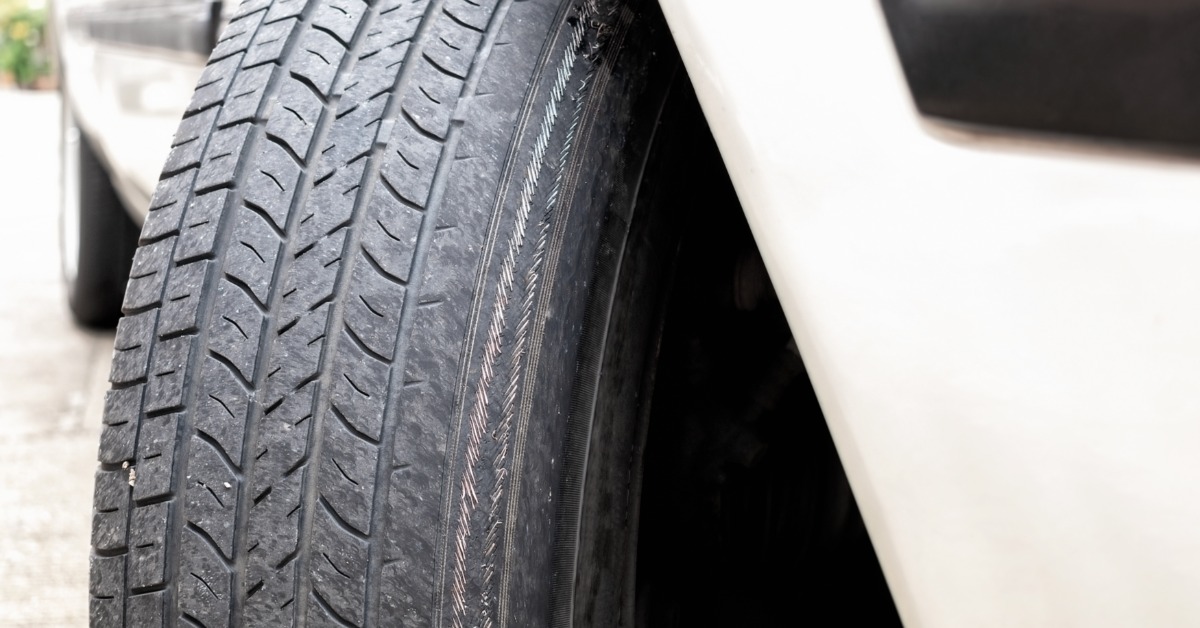
Feathering creates a tread pattern that feels flat in one direction and sharper in the other. You may notice the difference when you carefully feel the tread of your car’s cool tires after parking.
This pattern commonly relates to improper toe alignment. The tires may point slightly toward or away from each other instead of tracking straight ahead.
Worn suspension or steering components can make it harder for the wheels to maintain correct alignment. Even after an adjustment, excessive movement in a worn part may allow the alignment angles to shift again.
A vehicle should settle relatively quickly after it passes over a bump. If the body continues to move up and down, the shocks or struts may no longer control suspension motion effectively.
That extra movement affects more than ride comfort. The tires depend on stable contact with the pavement. Excessive bouncing changes the amount of force on the tread.
You may notice several related symptoms:
These signs don’t prove the failure of a particular suspension component. They do provide a reason to inspect the vehicle rather than waiting for the tire damage to become more severe.
A vehicle that drifts to one side can make routine driving more tiring. You may find yourself correcting the steering wheel often to maintain a straight path.
Alignment problems represent one possible cause. Tire pressure differences can also contribute. In some cases, worn suspension components allow a wheel to shift from its proper position and change how the vehicle tracks.
Wandering can feel slightly different. Instead of consistently pulling toward one side, the vehicle may seem reluctant to hold a straight line. Loose suspension or steering parts may contribute to that sensation.
Vibration can come from several areas, so drivers shouldn’t automatically blame the suspension. An out-of-balance tire, bent wheel, or tire damage can create similar symptoms.
Suspension wear can still play a role. If a worn component allows unusual wheel movement, the tire may develop an uneven pattern that creates vibration as it rolls.
The location and speed of the vibration may provide useful clues. Steering wheel vibration can relate to the front tires or wheels, while a vibration felt through the seat may come from farther back. A technician still must inspect the vehicle to identify the actual cause.
Tire life varies with tire design, road conditions, inflation, alignment, driving habits, and maintenance. That makes mileage alone an imperfect way to judge premature wear.
Still, a pattern of tires wearing out much faster than they should deserves investigation. Replacing the tires without identifying the cause may lead to another short service life.
Suspension problems represent only one possible source of irregular tire wear. Incorrect tire pressure, missed rotations, alignment changes, wheel balance issues, and road damage can produce their own symptoms.
That overlap makes diagnosis valuable. A visible wear pattern can point technicians in the right direction, but a complete inspection gives them more information about its cause.
Tire wear doesn’t reverse once rubber leaves the tread. Correcting an alignment or suspension problem can help prevent additional damage, but it can’t rebuild a worn section of tire.
That makes early detection worthwhile. Check your tread periodically and pay attention to changes in ride quality, steering response, road noise, and vibration. A small change may provide the first warning that something needs inspection.
Your tires interact with the suspension every mile you drive, which makes them useful indicators of changes beneath the vehicle. Cupping, edge wear, feathering, premature tread loss, new vibration, and unusual vehicle movement can all justify a closer inspection.
If you find unusual tire wear and need new tires in Hattiesburg, MS, visit RNR Tire Express. The team can inspect your tires, help determine if alignment may be contributing to the problem, and help you find the right replacement tires if your current set has reached the end of its usable life.
By signing up you agree to our Privacy Policy.