Maintenance
|
Jul 23, 2019
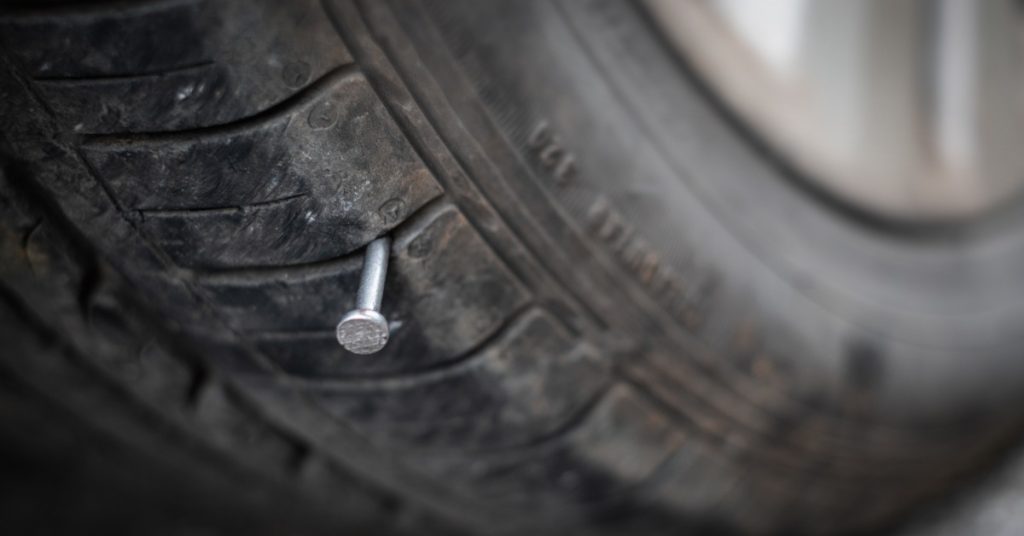
Finding a nail in your tire can make any drive feel stressful. You may wonder if you can keep driving, whether the tire will go flat, or if you need a replacement right away.
The good news is that a nail does not always mean you need a new tire. The next steps depend on where the nail sits, how much air the tire loses, and how quickly you respond. Below, we’ll explain what to do if you find a nail in your tire.
Your first move should always focus on safety. If you notice a nail while driving, avoid sudden braking, hard turns, or quick lane changes. Slow down gradually, turn on your hazard lights if necessary, and pull into a safe, level area away from traffic. Once you park, take a close look at the tire without touching or pulling the nail.
You may want to remove the nail as soon as you see it, but that can make the problem worse. The nail may plug the hole temporarily, which can slow air loss and give you time to get help.
When you pull the nail out, the tire may lose air much faster. Leave it in place until a tire professional can inspect the tire and determine the safest fix.
If you have a tire pressure gauge, check the tire before you drive again. Compare the reading to the recommended pressure listed on the sticker inside your driver-side door or in your vehicle owner’s manual.
A tire that still holds air may give you enough time to drive carefully to a nearby tire professional. A tire with very low pressure needs immediate attention because driving on it can damage the sidewall, wheel, and internal tire structure.
After you find a nail in your tire, you should check to see if it’s slowly leaking air. Your tire may look normal at first, but the pressure can drop after a few hours or overnight.
Watch for changes in how your vehicle feels. If the car pulls to one side, the steering feels heavy, or the tire looks lower than the others, stop driving and check the pressure again.
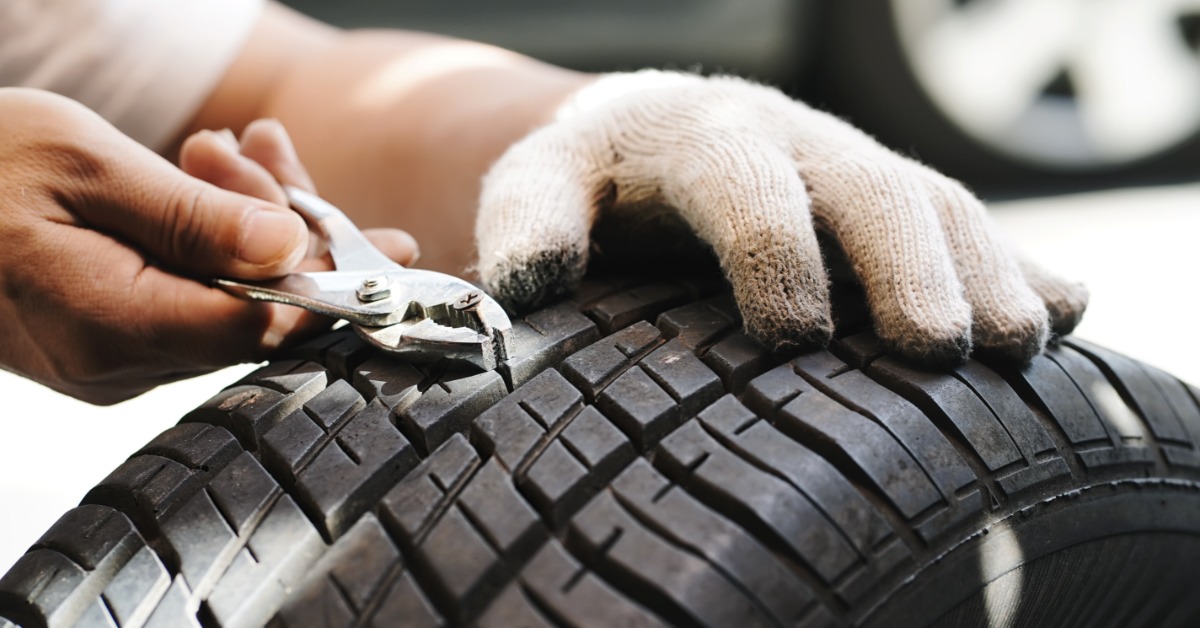
You should not drive on a tire that looks flat, feels unstable, or loses air quickly. Even a short drive on a flat tire can cause serious damage and turn a repairable issue into a replacement.
You should also stop driving if you hear flapping, thumping, or grinding from the tire area. These sounds may mean the tire has already lost too much air or suffered internal damage.
A tire professional may repair a nail puncture when the damage sits in the tread area, and the hole meets repair guidelines. The tread area contacts the road, and it has enough structure for a proper repair in many cases.
A safe repair usually requires more than a quick plug from the outside. A trained technician should inspect the inside of the tire, check for hidden damage, and use the proper repair method for the puncture.
The nail’s location plays a major role in whether the tire can stay on your vehicle. A puncture in the center tread has a better chance of repair than damage near the shoulder or sidewall.
Technicians generally cannot repair punctures in the sidewall because that part of the tire flexes as you drive. A repair in that area may not hold safely under heat, pressure, and road stress.
Even if the nail sits in a repairable area, the tire still needs enough tread and structural strength. A worn tire, a cracked tire, or a tire with previous damage may not make sense to repair.
A technician should also check whether you drove on the tire with low pressure. Low-pressure driving can damage the inside of the tire, even when the outside looks fine.
You may need a replacement if the nail punctured the sidewall, the tire has multiple punctures, or the damage sits too close to a previous repair. Replacing the tire can feel frustrating, but it protects your vehicle, your passengers, and your wheels. A damaged tire can lose air suddenly, overheat, or fail during normal driving.
Temporary sealants and quick roadside plugs may help in an emergency, but they should not replace a proper inspection. Some products can make future repairs harder, and they may not address internal tire damage.
Use temporary options only to get to a safe place or a tire professional when the situation calls for it. After that, inspect the tire as soon as possible so you know what you are driving on.
Many vehicles include a tire pressure monitoring system, also called TPMS. This system alerts you when one or more tires drop below a safe pressure level.
If the TPMS light turns on after you find a nail, take it seriously. The light may stay on until you inflate the tire, repair the tire, or replace it, depending on the issue.
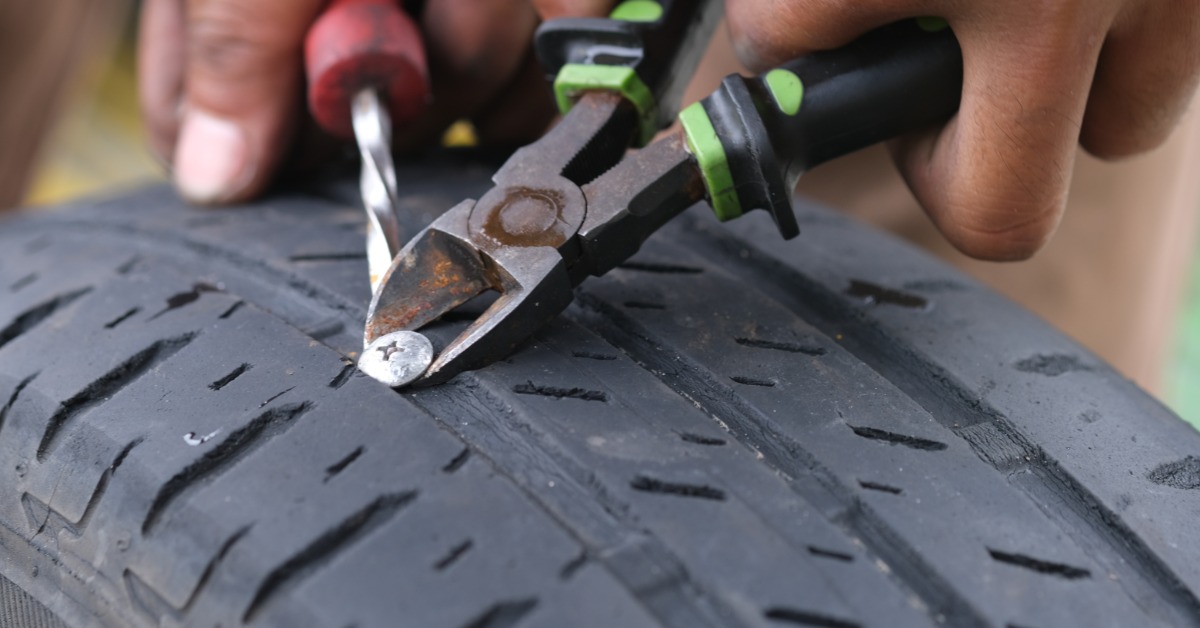
A nail in one tire gives you a good reason to check all four tires. Look for uneven wear, low tread, cracks, bulges, and other objects stuck in the tread.
This quick inspection can help you catch problems before they affect your drive. It can also help you understand whether you need one tire, a pair, or a full set.
Your driving routine can influence the best choice. A short local commute may give you different needs than long highway drives, work routes, or frequent family travel.
A tire professional can help you compare tire type, tread design, size, and performance needs. The goal is to match your vehicle with tires that fit your driving habits and budget.
You cannot avoid every nail, screw, or piece of road debris, but you can reduce your risk of encountering issues. Inflate your tires properly, check tread depth regularly, and inspect your tires after driving through construction areas or rough roads.
Regular tire checks also help your tires wear more evenly. When your tires stay in better condition, your vehicle handles better, brakes more confidently, and rides more smoothly.
A nail in your tire does not always mean disaster, but it does require quick attention. Leave the nail in place, check the pressure, avoid driving on a low tire, and have a professional inspect the damage.
If you find yourself with a nail in your tire, visit the RNR Tire Express tire shop in Pascagoula, MS. Our team can inspect the damage and tell whether it’s fixable or help you find a new replacement. We’ll make sure you drive away with safe tires and peace of mind!
By signing up you agree to our Privacy Policy.