Maintenance
|
Jul 23, 2019

A flat tire never shows up at a convenient time. It hits at the worst times, like when you’re on the way to work or trying to keep your day moving. That’s exactly why this step-by-step guide to changing a flat tire is built for real-world drivers who want to handle the situation quickly and confidently. Let’s break it down so that you know exactly what to do the moment you hear that thump and feel your car start to pull.
Before you reach for the jack, take a minute to gather everything you’ll need.
Before you begin, make sure you have the basics in your vehicle, including:
Depending on your vehicle, you may have a spare tire and tool kit or a compact tire repair kit stored in the trunk. It’s a good idea to check what your vehicle actually includes now so that you’re not figuring it out for the first time on the side of the road.
A few extra items can make the process easier and safer. Gloves might come in handy to keep your hands clean and protected. To confirm your spare is properly inflated before driving off, you’ll want a tire pressure gauge. Lastly, reflective triangles or road flares increase visibility, especially if you’re stopped on the shoulder or changing a tire at night.
Being prepared reduces stress when you’re already dealing with a roadside situation. When everything is within reach, you can stay focused and work efficiently. RNR Tire Express encourages drivers to check their spare tire and tools regularly so that they’re never caught off guard.
Safety always comes first. If you notice a flat tire while driving, slow down gradually and turn on your hazard lights. Avoid slamming on the brakes or making sudden turns.
Look for a flat, stable surface away from traffic. A parking lot is ideal, but if that’s not possible, pull as far onto the shoulder as you safely can. Try to avoid soft ground, hills, or curves where other drivers may not see you clearly.
Once stopped, engage the parking brake to prevent the vehicle from rolling. Taking a few extra moments to position your vehicle safely makes every step that follows easier.
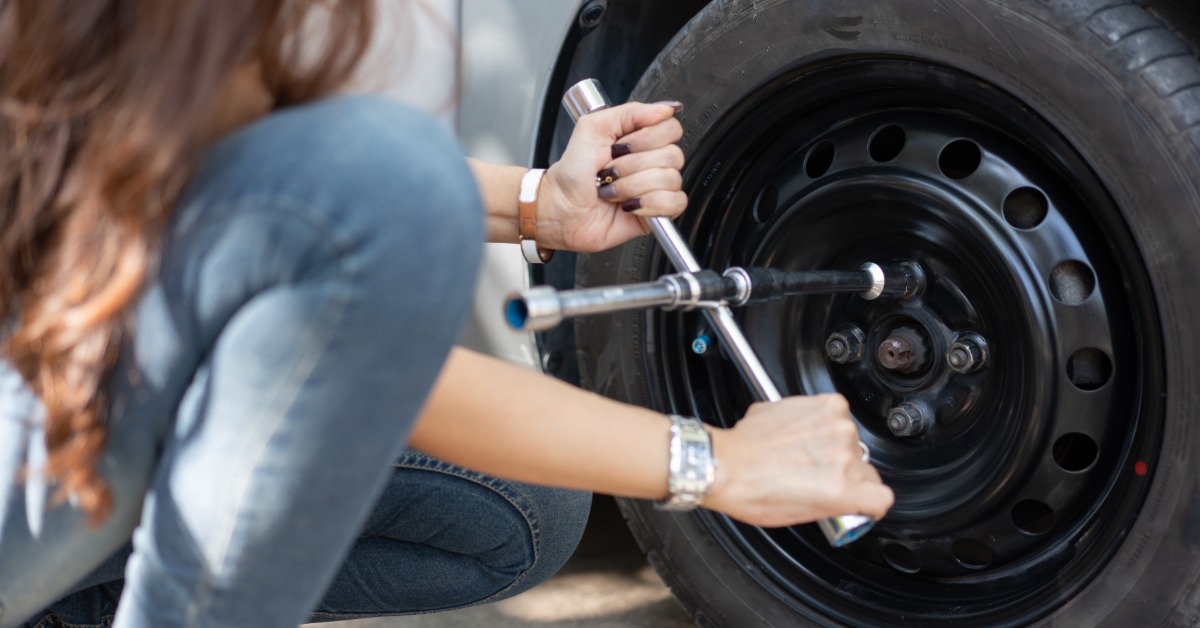
You might think lifting your vehicle is the next step, but you should loosen the lug nuts with a lug wrench before anything else. With the tire still on the ground, turn the nuts counterclockwise to break the initial resistance. You don’t need to remove the nuts completely yet; just loosen them enough that they’ll spin freely later.
It may take some force to get them moving. If they’re stuck, use your body weight carefully for extra leverage. Loosening the lug nuts while the tire is still on the ground prevents the wheel from spinning.
Work in a star pattern if possible to keep even pressure across the wheel. This will help when reinstalling the spare.

Check your owner’s manual to find the proper jack placement point. Proper placement is typically located along the frame near the flat tire. Placing the jack in the wrong spot can damage your vehicle, so be mindful!
Position the jack securely under the recommended lift point. Slowly raise the vehicle until the flat tire is about six inches off the ground. Make sure the car remains stable as you lift.
Never place any part of your body underneath the vehicle while it’s supported only by a jack. Stability is critical for safety during this step.
With the vehicle seated on the jack, continue unscrewing the loosened lug nuts until they come off. Place them somewhere secure so they don’t roll away.
Carefully pull the flat tire straight toward you and off the wheel studs. Tires can be heavier than they look, so use steady movements rather than jerking them loose.
Set the flat tire on its side nearby. Keeping it flat on the ground prevents it from rolling away while you install the spare.
To slide the spare into place, confirm it aligns with the wheel studs. Make sure the holes line up correctly so the tire fits flush against the hub.
Once mounted, reinstall the lug nuts on the studs and hand-tighten them. Don’t forget this step; it helps keep the tire securely in place before lowering the vehicle. Don’t worry about fully tightening the nuts quite yet.
Spare tires are smaller than regular tires and meant for temporary use. These tires are not designed for high speeds or long distances. If you need dependable replacements, RNR Tire Express offers a wide selection of tires in Dothan, AL, and throughout the Gulf Coast region to keep your vehicle performing at its best.
Slowly lower the vehicle back to the ground using the jack. Once the tire makes full contact with the surface, remove the jack completely.
Now it’s time to fully tighten the lug nuts. Use the lug wrench and again follow a star pattern. Apply firm pressure to ensure each nut is secure. Proper tightening helps prevent uneven pressure on the wheel.
Take a moment to inspect the spare tire once the vehicle is back on the ground. Make sure it looks stable and properly seated. Put the flat tire, jack, and tools back in your trunk. Keeping everything organized ensures you’re ready for the next emergency.
While flats can’t always be prevented, routine maintenance goes a long way. Check your tire pressure at least once a month and before long trips. Proper inflation improves performance and reduces uneven wear.
Inspect your tires for visible damage, such as cracks, bulges, or embedded objects. Addressing small issues early can prevent larger problems later. Regular tire rotations also help distribute wear evenly across all four tires.
If you’re unsure about tread depth or overall tire condition, a professional inspection can provide clarity. RNR Tire Express specializes in helping drivers choose safe, affordable replacement options with flexible payment options designed to fit real-world budgets.
Knowing how to change a tire is empowering, but having dependable tires matters just as much. Keep this step-by-step guide to changing a flat tire in mind, and remember that we’re always ready to serve your tire and wheel needs.
By signing up you agree to our Privacy Policy.