Tires
|
May 30, 2019
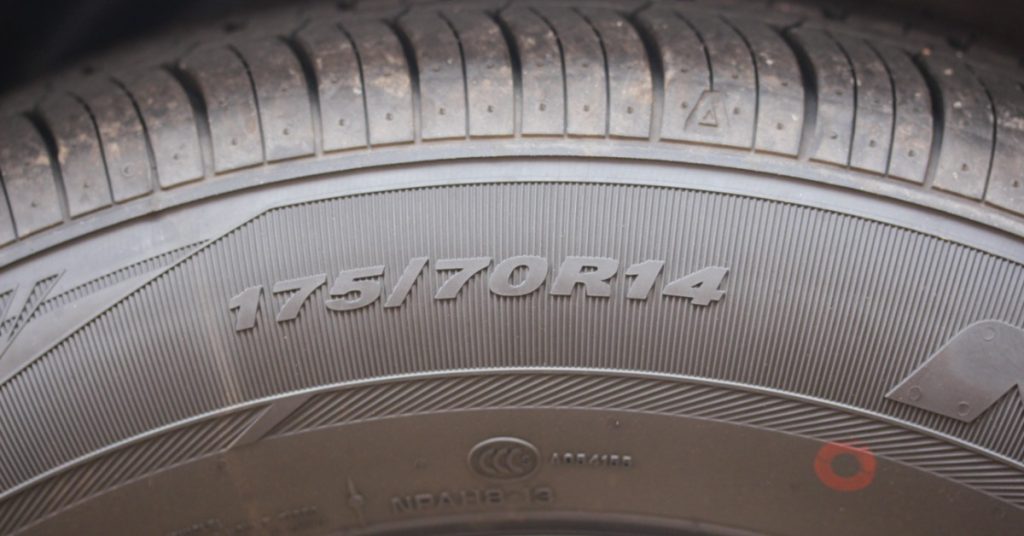
Tire sidewalls look like a wall of letters and numbers, but every character tells a story about fit, safety, and performance. When you understand those markings, you shop smarter and avoid buying a tire that rides rough, wears unevenly, or fails to match your vehicle’s needs. Keep reading to understand everything you need to know about tire numbers.
Tire numbers do more than describe a size. They connect directly to how your vehicle handles rain, heat, highway speed, and heavy loads. When the numbers match your vehicle’s requirements, you get predictable braking, better stability, and a smoother ride.
You’ll find tire markings molded into the sidewall, usually on both sides of the tire. One side may show the full details more clearly, depending on how the tire sits on the wheel. If you struggle to read the lettering, turn the steering wheel for better access or lift the vehicle and look at the inner sidewall.
You can also confirm the correct size and rating on your vehicle’s tire information placard. Manufacturers place it on the driver’s door jamb, inside the fuel door, or in the owner’s manual. That placard gives you a recommendation for tire size, load index, and speed rating for your specific model.
Most passenger tires start with a string of letters and numbers, such as P215/55R17 94V. Each segment has a job, and once you learn the pattern, you can decode it quickly.
The first character may be a letter or may be missing, depending on the tire type. A “P” means a passenger tire built for everyday cars and many crossovers. An “LT” marks a light truck tire, built for heavier loads and tougher service.
Some tires show no leading letter, which commonly points to a Euro-metric sizing format. The tire can still fit your vehicle, but you should verify the load capacity against the placard to stay within spec.
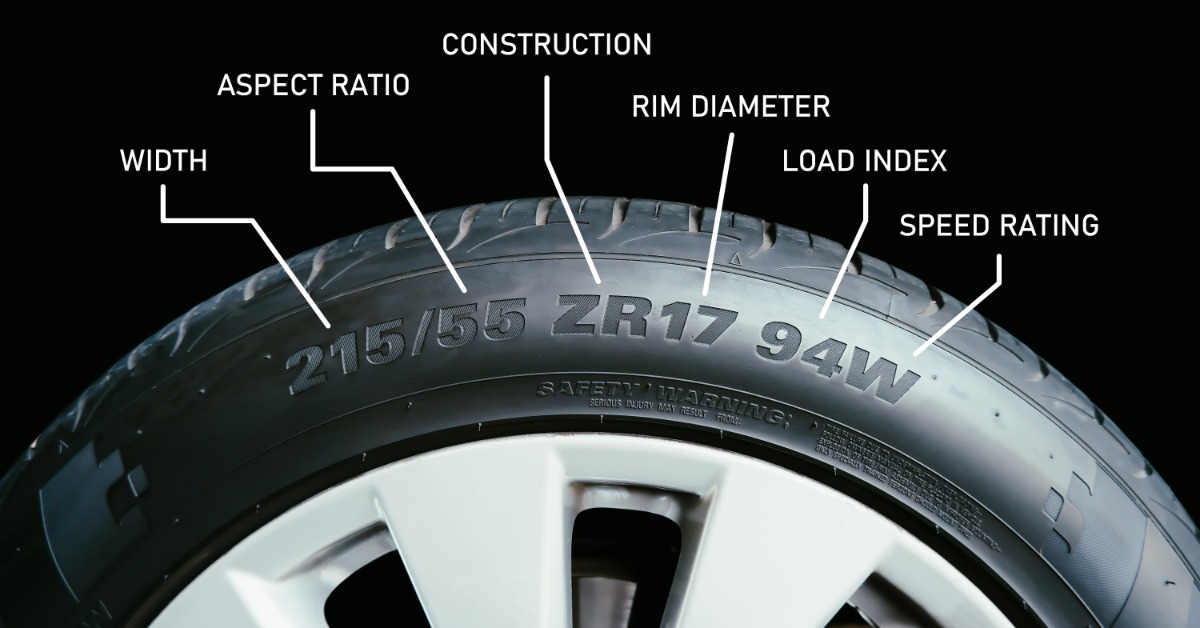
In a size like 215/55R17, the “215” describes the tire’s section width in millimeters. It measures the tire from sidewall to sidewall, not the tread area alone. Wider tires can give a more planted feel, but they also change how the tire clears suspension components and how it channels water.
Width also affects how the tire supports the vehicle’s weight and how the tread contacts the road. If you change the width, you should confirm clearance and make sure the load index still meets requirements.
The “55” in 215/55R17 is the aspect ratio. It describes sidewall height as a percentage of the tire’s width. A 55-series tire has a sidewall height equal to 55 percent of 215 mm.
Lower aspect ratios create a shorter, stiffer sidewall, which sharpens steering response and can make potholes feel harsher. Higher aspect ratios add sidewall height, which can improve ride comfort and protect the wheel from impacts.
The “R” means radial construction, which dominates modern vehicles. Radial tires place the body plies at a 90-degree angle to the direction of travel, which improves stability and tread life. You may also see “D” for diagonal (bias-ply) on specialty tires, trailers, or vintage applications.
For most cars and light trucks in Alabama, you’ll shop for radial tires. Just make sure the size and service ratings match your vehicle’s needs.
The last number in the main size code, such as “17,” tells you the wheel diameter in inches. This number must match your wheel size exactly. A 17-inch tire fits a 17-inch wheel, not a 16 or 18.
If you plan to change wheel size, you also need to adjust tire width and aspect ratio to keep the overall diameter close to the original. That keeps your speedometer accurate and helps your vehicle’s systems behave the way the manufacturer intended.
After the size, you’ll see a two- or three-digit number and a letter, such as 94V. These two markings matter as much as the size because they describe what the tire can safely carry and how fast it can sustain under proper conditions.
The load index is the number, like “94.” It corresponds to a specific weight capacity for a single tire. Higher numbers mean the tire can carry more weight at its rated pressure.
You should never choose a tire with a load index lower than the vehicle placard requires. If you drive with passengers, cargo, or towing demands, you protect your safety margin by meeting the placard spec and keeping inflation at the recommended level.
The speed rating is the letter, like “V.” It reflects the maximum sustained speed the tire can handle with proper inflation within its load range. Common ratings include S, T, H, V, W, and Y.
A higher speed rating can improve handling because the tire tends to use construction features that support stability at speed. Still, you should prioritize the rating your vehicle recommends, your driving conditions, and the ride quality you want.
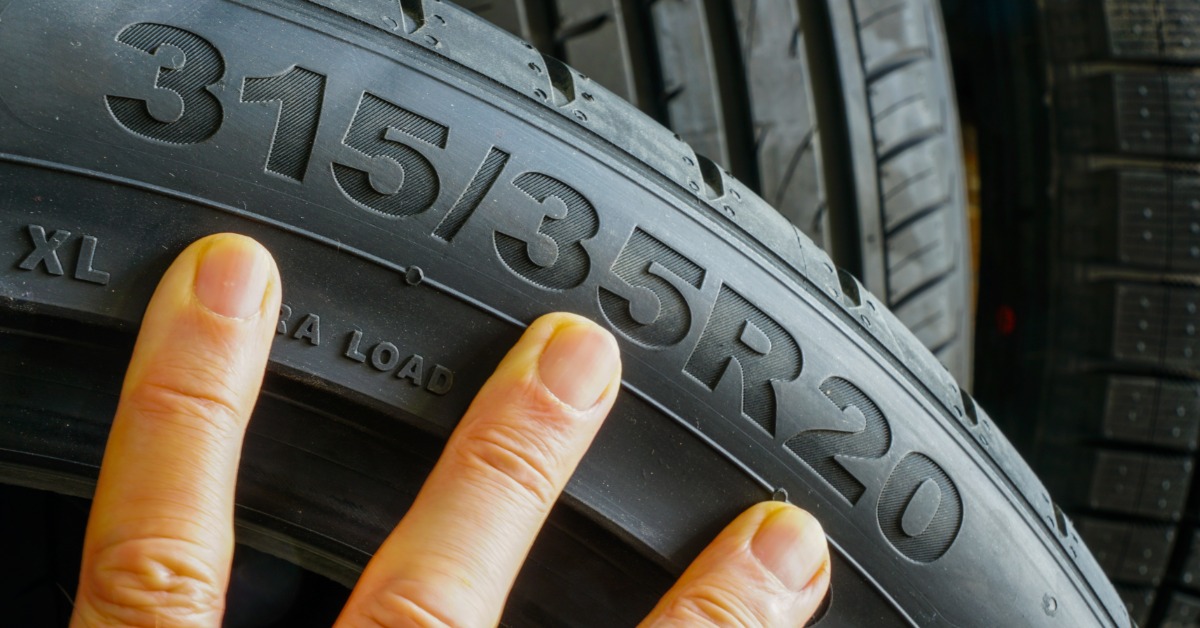
Every tire sold for road use includes a DOT code on the sidewall. This code identifies the manufacturing plant, tire type details, and the production date. The last four digits show the week and year of manufacture.
If the last four digits read 2324, that means the manufacturer made the tire in the 23rd week of 2024. Tire age matters because rubber compounds change over time, even if the tread looks deep. A tire professional can help you evaluate age, condition, and suitability for your vehicle.
You’ll see “Max Pressure” and “Max Load” molded into the sidewall. These numbers describe the tire’s maximum capacity at a specified pressure, not the recommended setting for your vehicle. Your vehicle’s recommended PSI comes from the placard, and it balances ride, handling, and load needs.
Inflating the sidewall to the maximum can reduce ride comfort and change contact patch behavior. Underinflation, on the other hand, increases heat buildup and wears the shoulders faster. The placard gives you the best baseline, and a shop can fine-tune based on your driving and load habits.
Now that you know everything about tire numbers, you can match them to your vehicle. Start with your placard, then use the sidewall to confirm the tire meets or exceeds the load index and speed rating. After that, choose a tread type that matches how you drive.
If you want to change tire size for appearance or performance, treat it as a full system decision. Overall diameter, width, and load capacity all interact with braking, stability control, and suspension clearance.
If you want a second set of eyes on your tire code, stop by our RNR Tire Express tire shop in Mobile, AL, and let a professional walk you through the sidewall markings. Our team can match the right size, load index, and speed rating to your vehicle, then help you choose a tire that fits your driving needs and budget. Ask about our payment options and get set up with tires that feel right from the first mile.
By signing up you agree to our Privacy Policy.